

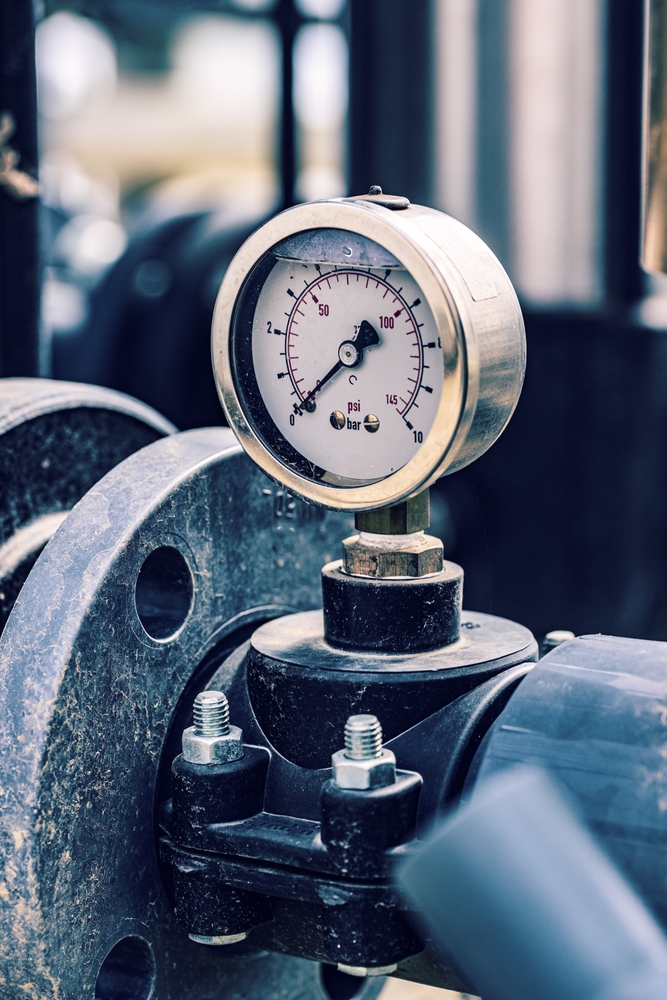
A high-pressure sensing line carries process pressure from the higher-pressure measurement point in a system to the HI connection of a differential pressure gauge, switch, or transmitter. It is sometimes also called a high-side pressure line or impulse line.
The word “high” does not necessarily mean that the system operates at extremely high pressure. It identifies the side of the differential pressure measurement with the higher pressure relative to the other measurement point. A system operating at relatively low pressure can still have a high-pressure sensing line and a low-pressure sensing line.
In our differential pressure instruments, the pressure supplied to the HI port is compared with the pressure supplied to the LO port. The difference between those two pressures produces the differential pressure measurement. Because the sensing lines deliver the process pressures to the instrument, their condition, routing, connections, and installation can directly affect the usefulness of the reading.
What Does the High-Pressure Sensing Line Do?
The primary purpose of the high-pressure sensing line is to transmit pressure from the high side of the process to the HI port of the differential pressure instrument. It does not generate or increase pressure. It provides a path through which the existing process pressure can act on the instrument’s sensing element.
Consider a filter-monitoring application. One pressure connection is located upstream of the filter, where pressure is normally higher. Another connection is located downstream, where pressure is lower because some pressure is lost as fluid passes through the filter. The high-pressure sensing line connects the upstream pressure point to the HI side of the gauge, while the low-pressure line connects the downstream point to the LO side.
Our gauge then responds to the difference between these two pressures. As a filter loads with contaminants, its resistance can increase, causing the pressure difference to rise under comparable flow conditions. This makes differential pressure filter monitoring useful for evaluating filter condition.
The same basic arrangement can be used across strainers, heat exchangers, valves, pumps, and other equipment. The location of the high-side pressure connection depends on what is being measured.
A high-pressure sensing line can also be used in tank-level measurement. In a closed-tank differential pressure arrangement, the high-pressure connection is normally located near the lower portion of the tank, where the pressure includes the effect of the liquid column. The low-pressure side references pressure in the vapor space. The resulting pressure difference can be related to liquid level.
In every case, the high-pressure sensing line must transmit the pressure from the intended measurement point accurately enough for the differential pressure instrument to respond properly.
High-Pressure Sensing Line Installation and Routing
The sensing line should provide a dependable pressure path between the process and the instrument. Its design depends on the process fluid, pressure, temperature, tubing material, instrument location, and installation layout.
Keeping sensing lines reasonably short can reduce opportunities for leaks, blockage, trapped gas, liquid accumulation, and delayed pressure response. The tubing should also be sized so that the pressure signal is not unnecessarily restricted.
Routing becomes particularly important because the material inside the line can affect the pressure transmitted to the instrument. In liquid service, trapped gas can introduce measurement errors. In gas service, accumulated liquid or condensate can create an unwanted pressure head. Proper routing helps prevent these conditions.
For liquid systems, sensing lines are commonly routed to discourage gas pockets and allow gas to move toward a venting point. For gas applications, routing should discourage condensate from remaining in the pressure line. The exact installation arrangement depends on the application and should follow the requirements of the equipment and system.
The high-pressure and low-pressure lines should also be exposed to similar environmental conditions when possible. Significant temperature differences between the two lines can change the density of the fluids they contain. In sensitive applications, that difference can affect the differential pressure reading.
Connections must also be compatible with the instrument and tubing. Our differential pressure gauges have separate ports marked HI and LO, and the process connection type varies by model and configuration. The differential pressure gauge port type must match the fitting used in the sensing-line installation.
The process media must be compatible with the sensing-line material, fittings, seals, and wetted materials inside the gauge. Water, hydraulic fluid, compressed air, gases, treatment chemicals, and other process materials can require different construction. Our Chemical Compatibility Database can provide information when evaluating instrument materials.
Installation should also provide reasonable access to the sensing lines. Pressure lines may eventually require inspection, cleaning, venting, draining, or replacement. Routing tubing where it cannot be reached can make troubleshooting unnecessarily difficult.
Problems That Can Affect a High-Pressure Sensing Line
A high-pressure sensing line can cause an incorrect differential pressure reading even when the gauge itself is operating properly. This is why we recommend checking pressure connections and process conditions before assuming that an unusual reading indicates instrument failure.
Blockage is one of the most common concerns. Sediment, dirt, corrosion products, process material, or other contaminants can restrict the sensing line or pressure tap. A partially blocked line may respond slowly or transmit a pressure that does not accurately follow changing process conditions. A completely blocked high-pressure sensing line can prevent the HI side of the instrument from receiving the process pressure at all.
Leaks can cause another problem. Loose fittings, damaged tubing, deteriorated seals, or physical damage can allow pressure to escape before it reaches the gauge. The resulting differential pressure indication may be lower than the actual process condition or may respond inconsistently.
Trapped gas in a liquid-filled sensing line can also affect pressure transmission. Conversely, liquid trapped in a gas sensing line can create an additional hydrostatic pressure component. These conditions can make the pressure presented to the HI port different from the pressure at the intended process measurement point.
Freezing is another concern when water or another process fluid can solidify inside exposed tubing. A frozen sensing line can block the pressure path and may damage tubing, fittings, or other components.
The high- and low-pressure connections can also be accidentally reversed. Our differential pressure instruments identify the two process connections as HI and LO. The higher-pressure measurement point should be connected to the appropriate HI port unless the specific application and instrument configuration state otherwise.
If a differential pressure gauge shows no reading, reads unexpectedly high or low, or responds slowly, inspecting the high-pressure sensing line should be part of the differential pressure gauge troubleshooting process.
Maintaining Reliable High-Pressure Sensing Line Performance
The high-pressure sensing line is a relatively simple part of a differential pressure installation, but it has an important role. The instrument can only compare the pressures that actually reach its HI and LO ports. A clogged, leaking, improperly routed, or incorrectly connected sensing line can therefore produce misleading results even when the gauge remains accurate.
Routine inspection should include the tubing, fittings, process pressure taps, valve positions, and connections at the gauge. Changes in the appearance or behavior of the differential pressure reading should be evaluated in the context of both the process and the sensing lines before adjustments are made to the instrument.
The pressure range of the gauge also needs to match the differential pressure being measured. A high-pressure sensing line may carry substantial system pressure while the gauge measures only a relatively small difference between the high and low sides. Differential pressure range and maximum working pressure are separate specifications and should both be considered when selecting an instrument.
Our Differential Pressure Product Selection Guide can help identify whether a piston, diaphragm, bellows, switch, or transmitter configuration is appropriate for the application.
A properly installed high-pressure sensing line provides a clear pressure path from the process to the HI side of the instrument. When the high- and low-pressure sensing lines accurately represent their respective process points, the differential pressure gauge can provide the information needed for filtration, liquid systems, heat exchangers, pump monitoring, tank level, and other differential pressure applications.
Since 1958, Mid-West Instrument has been a leading provider of premium differential pressure gauges. Need help finding the right pressure gauge and equipment for your business? Reach out to us today to speak with one of our experienced professionals.