

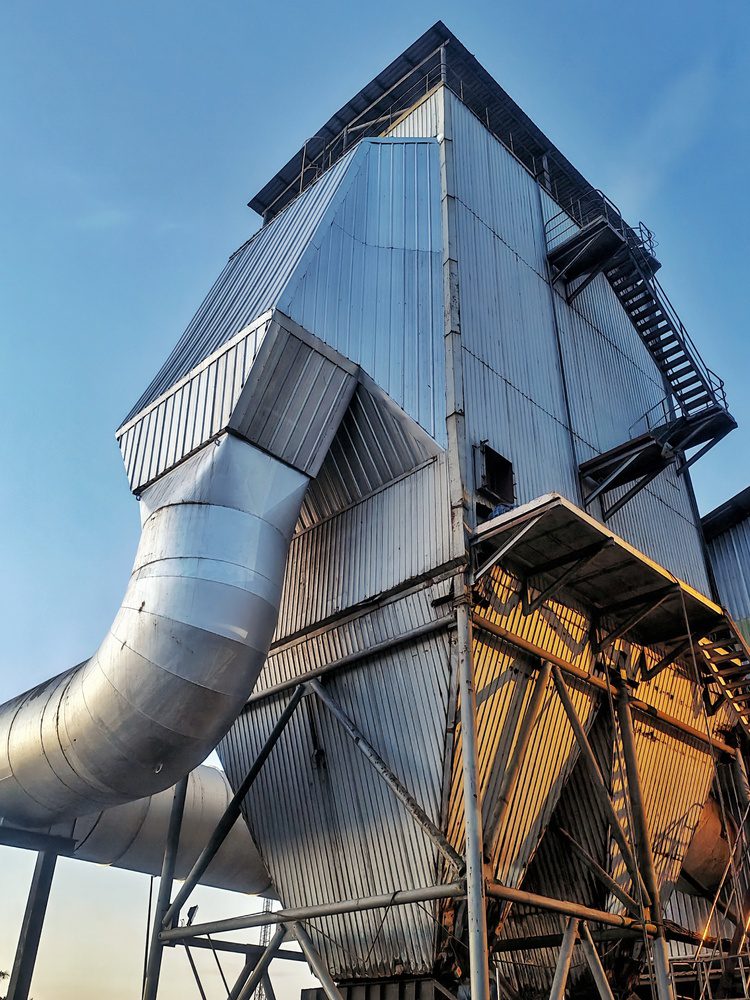
Baghouse differential pressure is one of the most useful indicators of dust collector condition, but the number on the gauge does not tell the entire story by itself. A rising reading may indicate normal dust cake formation, blinded filter bags, excessive airflow, or a failed cleaning system. A falling reading may indicate reduced airflow, leaking bags, an open access point, or air bypassing the filters. The most reliable diagnosis comes from comparing the reading with the collector’s established baseline, current airflow, cleaning activity, and visible emissions.
What Does Your Baghouse Differential Pressure Reading Mean?
Baghouse differential pressure measures the difference in pressure between the dirty-air side and the clean-air side of a dust collector. Air must pass through the filter bags to reach the clean-air plenum. The resistance created by the bags and accumulated dust produces a measurable pressure drop.
There is no single normal baghouse differential pressure range for every collector. The correct operating range depends on:
- Collector design and size
- Filter bag material
- Air volume and fan speed
- Dust type and concentration
- Cleaning method
- Condition and age of the bags
- Temperature and moisture levels
- Manufacturer recommendations
A new set of filter bags may begin with a relatively low pressure drop. As a useful dust cake forms, baghouse differential pressure often increases and then stabilizes. This initial rise is not necessarily a problem. The dust cake can improve particle capture, provided it does not become thick enough to restrict airflow excessively.
The best practice is to establish a baseline while the collector is operating properly. Record differential pressure at known production rates and airflow conditions. Note how the reading changes during pulse cleaning, startup, shutdown, and periods of heavier dust loading.
A normal reading is therefore not just a fixed number. It is a repeatable range associated with healthy airflow, acceptable emissions, and effective cleaning. A reading outside that range should prompt investigation, but it should not automatically trigger bag replacement.
What Do Rising, Falling, And Unstable Readings Indicate?
A trend is often more valuable than a single measurement. Baghouse differential pressure should be reviewed alongside fan operation, dampers, production load, pulse-cleaning activity, and visible conditions around the collector.
A gradually rising reading often indicates increasing resistance through the filter media. Common causes include:
- Normal dust accumulation between cleaning cycles
- Blinded bags that no longer release dust effectively
- Moisture or oil causing dust to adhere to the fabric
- Insufficient compressed-air pressure for pulse cleaning
- Failed solenoid valves, diaphragm valves, or cleaning controls
- Excessive airflow through the collector
- Dust bridging or buildup inside the hopper
- Filter bags that are unsuitable for the dust or temperature
If the reading continues to increase and does not fall after a cleaning cycle, inspect the pulse-cleaning system. Listen for valve operation, verify compressed-air supply, and confirm that the controller is sending the expected signals. A cleaning system can appear active even when weak pulses are failing to remove the dust cake.
A sudden drop in baghouse differential pressure requires a different response. It may indicate:
- A torn, broken, or missing filter bag
- A bag that is not seated correctly
- An open access door or failed seal
- A bypass path around the filters
- A hole or leak between plenums
- Reduced fan speed or airflow
- A closed damper or process shutdown
A low reading combined with visible dust at the outlet is a strong reason to inspect the bags and sealing surfaces. A low reading without emissions may simply reflect reduced airflow, so verify fan and damper conditions before assuming that a bag has failed.
Unstable or frozen readings can also point to an instrumentation problem. Dust, moisture, or condensation may plug the pressure taps or tubing. Damaged tubing can leak. A poorly located pressure tap may be exposed to turbulence. Before opening the collector or replacing bags, confirm that the instrument and its connections are responding correctly.
How Should Baghouse Differential Pressure Be Monitored?
A useful monitoring setup begins with proper pressure connections. The high-pressure port should sense the dirty-air side of the collector, while the low-pressure port should sense the clean-air side. The instrument then displays the resistance across the filter bags.
Pressure taps should be located where they represent conditions in each plenum without being directly exposed to unusual turbulence or heavy dust impact. Tubing should be routed to reduce plugging, kinking, condensation, and accidental damage. It should also be accessible enough for inspection and cleaning.
Because baghouses handle air and gas at relatively low differential pressures, diaphragm-type instruments are commonly appropriate. The range should be narrow enough to make meaningful changes easy to see, but wide enough to include expected startup, operating, cleaning, and upset conditions.
Facilities can choose from several monitoring approaches:
- Local gauge: Gives operators an immediate dial reading during routine inspections.
- Differential pressure switch: Activates an alarm when a high or low set point is reached.
- Differential pressure transmitter: Sends a continuous signal to a control system or historian.
- Combined indication and output: Provides local visibility while also supporting remote monitoring.
High and low alarms can both provide value. A high alarm may identify severe loading, blinded bags, or cleaning failure. A low alarm may warn of a broken bag, bypass condition, or loss of airflow.
Alarm settings should not be copied from another collector without review. Set points should be based on the collector manufacturer’s limits, the established operating baseline, and the point at which maintenance action is required. Allow enough separation between normal fluctuations and alarm thresholds to avoid nuisance alarms.
Trending baghouse differential pressure can improve maintenance planning. A transmitter connected to the plant control system can show whether pressure drop is rising over days or weeks. It can also reveal whether cleaning pulses produce the expected temporary reduction. These patterns help teams distinguish gradual filter loading from sudden equipment failure.
How Do You Select The Right Instrument And Prepare For Installation?
Instrument selection should begin with operating data rather than a model number. Before requesting a gauge, switch, or transmitter, gather the following information:
- Normal and maximum baghouse differential pressure
- Desired dial units, such as inches of water column
- Maximum static or working pressure
- Process and ambient temperatures
- Gas composition and material compatibility
- Indoor, outdoor, or washdown exposure
- Hazardous-location requirements
- Local indication and remote output needs
- High and low alarm set points
- Electrical switch load and control-system requirements
The provider should also ask how the collector operates. A continuously pulsed baghouse may show a different pattern from an on-demand cleaning system. Variable-speed fans can change differential pressure even when bag condition stays the same. Understanding those details helps prevent a normal operating change from being mistaken for a filter problem.
Mid-West Instrument manufactures differential pressure gauges, switches, and transmitters that can support local baghouse indication, preset alarms, and remote monitoring. Available switch and relay configurations can alert operators or initiate equipment actions at selected values. Transmitter options can supply a 4–20 mA output while preserving the pointer-and-dial display for local inspection.
For gas applications, diaphragm-type gauge configurations offer low differential pressure ranges suited to monitoring pressure drop. Weather-resistant enclosures, hazardous-location options, field-adjustable switch set points, and several dial sizes and scales allow the instrument to be matched to the installation rather than forcing the installation to fit the instrument.
Baghouse differential pressure is most useful when it is treated as a condition indicator, not an isolated number. Establish a baseline, compare readings at similar airflow, watch the trend, verify cleaning performance, and inspect the pressure lines before assuming the bags have failed. Contact Mid-West Instrument to discuss your collector’s expected pressure range, alarm requirements, mounting environment, and remote monitoring needs.