

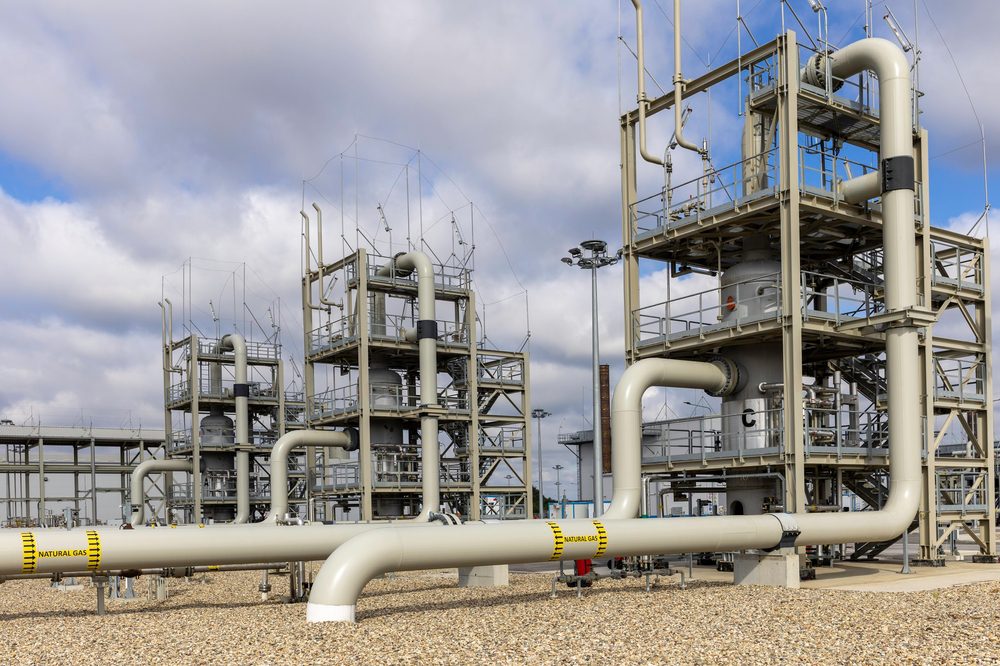
Natural gas systems depend on clean, consistent flow. Before gas reaches downstream equipment, it may carry solid particulates, dirt, rust, scale, pipe debris, liquid droplets, or other unwanted materials. Filtration helps remove those contaminants so the gas stream can move more efficiently and so equipment downstream can operate with fewer interruptions.
The filter, however, is not a set-it-and-forget-it component. Every filter has a job to do, and that job becomes harder as debris collects. As the element loads, flow resistance increases. If the condition is not spotted early, the result can be reduced efficiency, unstable operation, nuisance shutdowns, equipment strain, or unplanned downtime.
That is where natural gas differential pressure measurement becomes valuable. A differential pressure gauge measures the pressure difference between the inlet and outlet sides of the filter. When the filter is clean, that pressure difference should be within a normal operating range. As the filter clogs, the pressure drop increases. The gauge turns that hidden condition into a visible reading.
At Mid-West Instrument, we see differential pressure monitoring as one of the most practical ways to protect natural gas filtration systems. It gives operators a clear indication of filter condition without requiring them to guess, over-maintain, or wait until a process problem appears. Instead of reacting to a clogged filter after performance suffers, teams can plan service based on actual filter loading.
How Differential Pressure Gauges Reveal Filter Clogging
A natural gas filter works by capturing unwanted material from the gas stream. Over time, that captured material restricts the flow path through the filter element. The upstream side must work against more resistance, while the downstream side receives less available pressure. The difference between those two points is the filter’s differential pressure.
A differential pressure gauge compares those two pressures and displays the pressure drop across the filter. When the filter is relatively clean, the reading remains low or within the expected range. When debris begins to accumulate, the reading climbs. That rising indication is the key warning sign.
This matters because clogging is often gradual. A filter may still allow flow while already approaching a condition that can create trouble. Without natural gas differential pressure monitoring, operators may not know that the filter is loading until downstream equipment complains. By then, the system may already be operating inefficiently.
Differential pressure readings can reveal several useful conditions. A steady increase may show normal filter loading. A sudden increase may suggest an unusual contamination event or a blockage. A reading that stays high after filter replacement may point to a system issue, incorrect installation, or another restriction. A reading that does not change at all may suggest a plugged impulse line, damaged instrument, bypassed filter, or connection problem.
The gauge also helps reduce unnecessary filter changes. Replacing filters only by calendar schedule can waste money if elements still have useful life left. Waiting too long can cause downtime. Differential pressure gives maintenance teams a better middle path: service the filter when the reading shows that service is needed.
Turning Readings Into Action Before Downtime
The value of a gauge depends on what the team does with the information. A natural gas differential pressure reading should be part of a simple operating routine, not just a number on a dial.
Start by establishing a clean-filter baseline. After a new or properly serviced filter is installed, record the normal differential pressure at typical flow conditions. This baseline helps operators understand what healthy operation looks like for that specific system.
Next, define an action point. This may be a reading that indicates the filter is ready for inspection, cleaning, or replacement. In many facilities, it is useful to have more than one level. A lower level can trigger closer observation or planned maintenance. A higher level can indicate that service is needed promptly to avoid process disruption.
Operators should also watch the rate of change. A filter that loads slowly over months tells a different story than one that rises sharply in a few days. Rapid changes may suggest upstream contamination, construction debris, liquid carryover, process upset, or a failing component. Differential pressure readings can help maintenance teams investigate the cause instead of treating every clogged filter as an isolated event.
For critical natural gas systems, a local gauge may be paired with switch or transmitter options. A gauge gives immediate field visibility. A switch can trigger an alarm when the filter reaches a selected pressure drop. A transmitter can send continuous readings to a control system for trending and remote monitoring. These options help facilities respond faster, especially when the filter is not in a location that operators check frequently.
Good documentation strengthens the process. Recording differential pressure during rounds, before and after filter changes, and after troubleshooting gives the team a useful history. Over time, that history can show whether filters are loading faster, whether maintenance intervals need adjustment, or whether upstream conditions are changing.
Selecting Gauges for Natural Gas Differential Pressure Applications
Natural gas filtration applications require instruments that match the service. The right gauge should provide readable indication, withstand the working pressure, suit the gas environment, and support the facility’s maintenance practices.
The pressure range is the first consideration. The gauge should be scaled so normal readings and rising filter load are easy to see. If the range is too wide, small but important changes may be difficult to detect. If the range is too narrow, the gauge may spend too much time near the top of the scale. A well-selected range gives operators clear visibility from clean-filter operation to the service point.
Working pressure is just as important. Differential pressure gauges measure the difference between two points, but the instrument must also handle the static pressure present in the natural gas line. A low differential pressure range may be used on a high-pressure system, so both values must be reviewed.
For dirtier service or applications with greater amounts of particulate, diaphragm-type instruments are often a strong choice. Diaphragm designs can be well suited for gases and for applications where debris may be present. In natural gas filtration, durability, readability, and compatibility all matter because the instrument is part of the maintenance decision process.
Options can make the gauge more useful. A maximum follower pointer can show the highest differential pressure reached since the last reset, which is helpful when conditions fluctuate or when no one is standing in front of the gauge during a peak event. Switch options can support alarms. Transmitter outputs can support remote visibility, trending, and integration with plant systems.
Installation should be clean and intentional. The high-pressure port should connect to the upstream side of the filter, and the low-pressure port should connect to the downstream side. Connections should be labeled clearly so readings are not misinterpreted. The gauge should be mounted where it is accessible, protected, and easy to read during routine rounds.
Natural gas filtration protects downstream equipment, but the filter itself needs monitoring. A clogged filter can quietly increase pressure drop until flow, efficiency, and reliability suffer. Differential pressure gauges help operators see that condition early, plan maintenance more effectively, and reduce the risk of avoidable downtime.
If your facility needs help selecting a natural gas differential pressure gauge, adding alarm capability, or improving filter monitoring practices, contact Mid-West Instrument. Our team can help you choose the right differential pressure solution for your natural gas filtration application and keep your system operating with greater confidence.